
Validation Data Gallery
Tested Applications
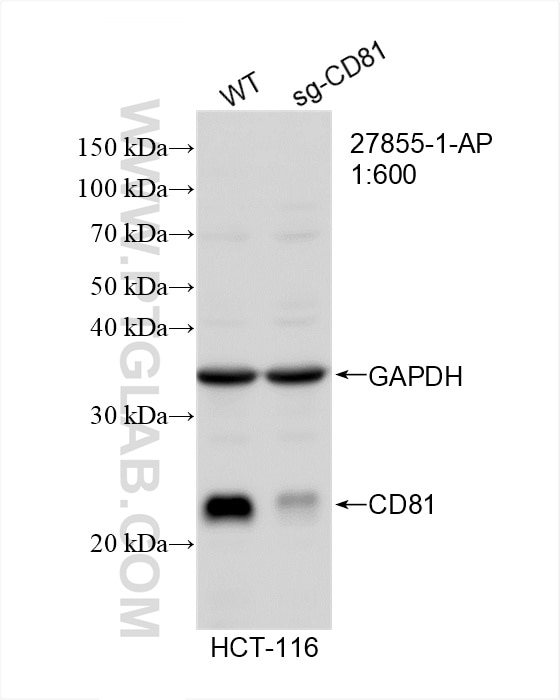
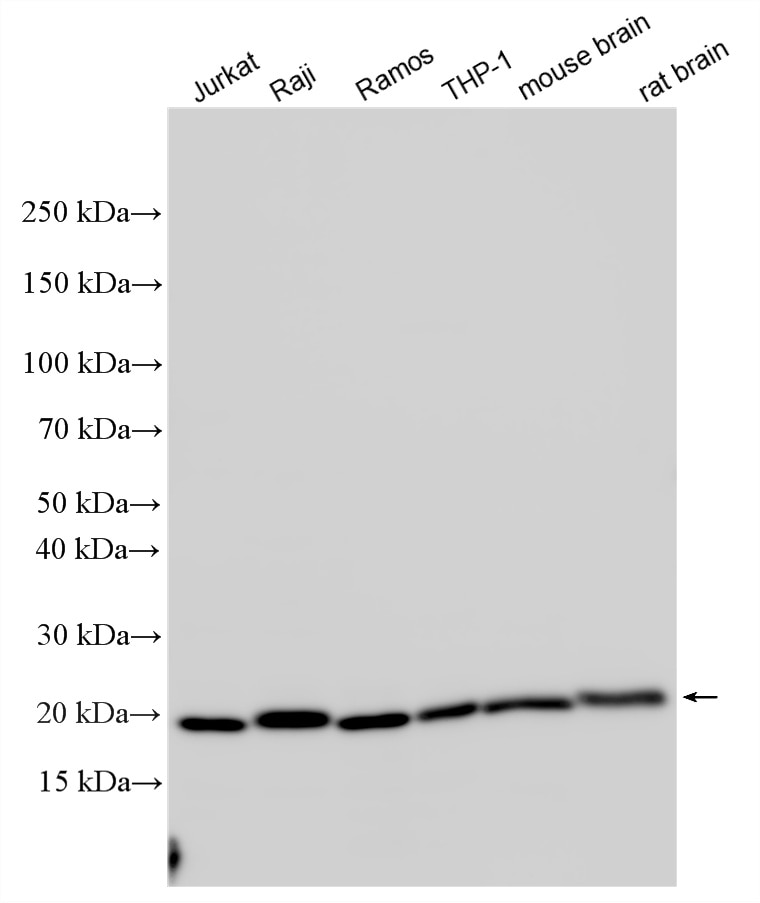
| Positive WB detected in | Jurkat cells, HCT 116 cells, Raji cells, Ramos cells, THP-1 cells, mouse brain tissue, rat brain tissue |
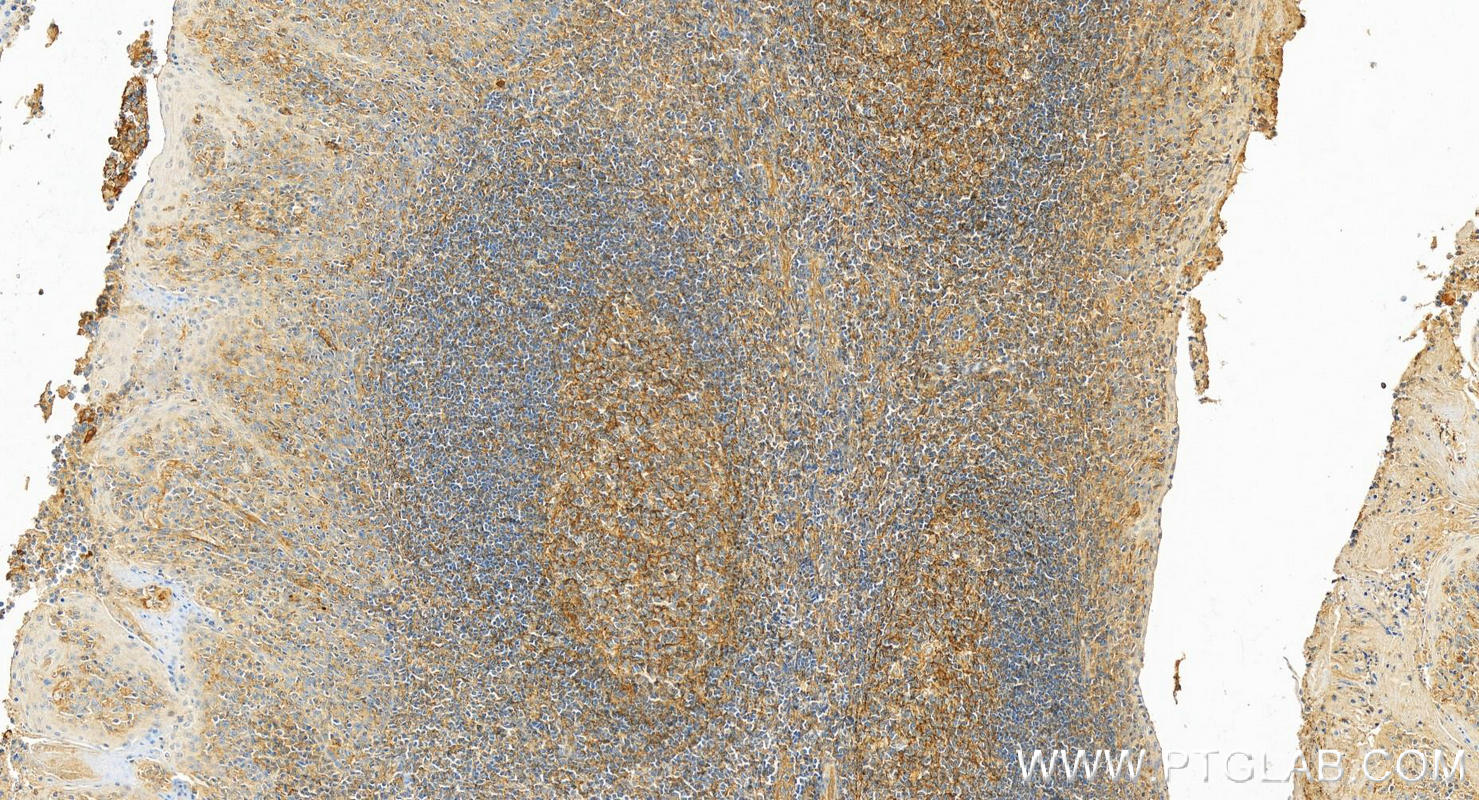
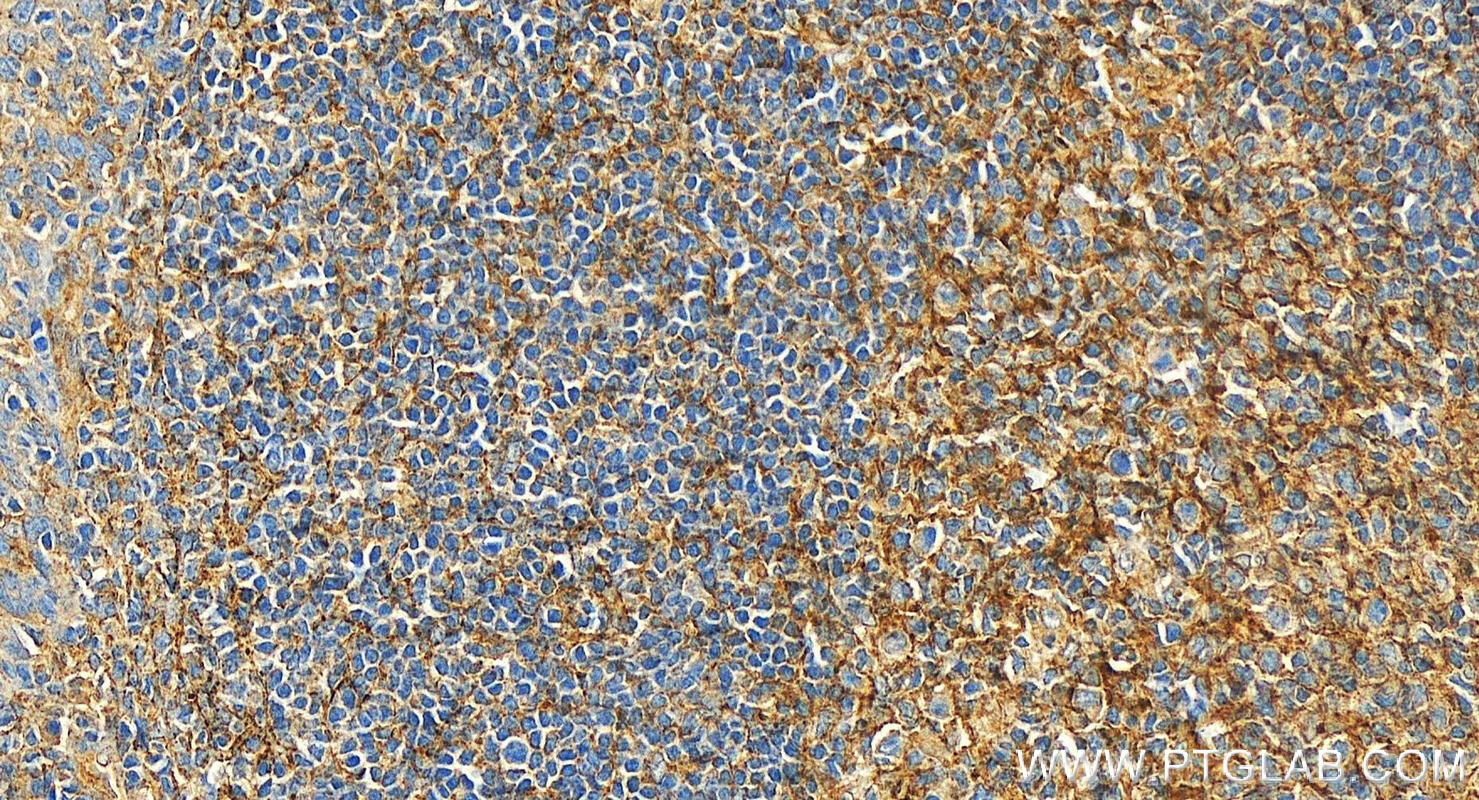
| Positive IHC detected in | human tonsillitis tissue Note: suggested antigen retrieval with TE buffer pH 9.0; (*) Alternatively, antigen retrieval may be performed with citrate buffer pH 6.0 |
Recommended dilution
| Application | Dilution |
|---|---|
| Western Blot (WB) | WB : 1:1000-1:6000 |
| Immunohistochemistry (IHC) | IHC : 1:1000-1:4000 |
| It is recommended that this reagent should be titrated in each testing system to obtain optimal results. | |
| Sample-dependent, Check data in validation data gallery. | |
Published Applications
| KD/KO | See 1 publications below |
| WB | See 170 publications below |
| IHC | See 3 publications below |
| IF | See 2 publications below |
Product Information
27855-1-AP targets CD81 in WB, IHC, IF, ELISA applications and shows reactivity with human, mouse, rat samples.
| Tested Reactivity | human, mouse, rat |
| Cited Reactivity | human, mouse, rat, canine, zebrafish, bovine |
| Host / Isotype | Rabbit / IgG |
| Class | Polyclonal |
| Type | Antibody |
| Immunogen |
CatNo: Ag27298 Product name: Recombinant human CD81 protein Source: e coli.-derived, PET28a Tag: 6*His Domain: 114-199 aa of BC002978 Sequence: VNKDQIAKDVKQFYDQALQQAVVDDDANNAKAVVKTFHETLDCCGSSTLTALTTSVLKNNLCPSGSNIISNLFKEDCHQKIDDLFS 相同性解析による交差性が予測される生物種 |
| Full Name | CD81 molecule |
| Calculated molecular weight | 26 kDa |
| Observed molecular weight | 23 kDa |
| GenBank accession number | BC002978 |
| Gene Symbol | CD81 |
| Gene ID (NCBI) | 975 |
| ENSEMBL Gene ID | ENSG00000110651 |
| RRID | AB_2880995 |
| Conjugate | Unconjugated |
| Form | |
| Form | Liquid |
| Purification Method | Antigen affinity purification |
| UNIPROT ID | P60033 |
| Storage Buffer | PBS with 0.02% sodium azide and 50% glycerol{{ptg:BufferTemp}}7.3 |
| Storage Conditions | Store at -20°C. Stable for one year after shipment. Aliquoting is unnecessary for -20oC storage. |
Background Information
CD81 (also known as TAPA1or TSPAN28) is a membrane protein of the tetraspanin superfamily, which are characterized by the presence of four conserved transmembrane regions. Many of these members are expressed on leukocytes and have been implicated in signal transduction, cell-cell interactions, and cellular activation and development. CD81 is involved in signal transduction and cell adhesion in the immune system (PMID: 9597125). CD81 has also been identified as an essential receptor for HCV (hepatitis C virus) (PMID: 21428934).
Protocols
| Product Specific Protocols | |
|---|---|
| IHC protocol for CD81 antibody 27855-1-AP | Download protocol |
| WB protocol for CD81 antibody 27855-1-AP | Download protocol |
| Standard Protocols | |
|---|---|
| Click here to view our Standard Protocols |
Publications
| Species | Application | Title |
|---|---|---|
Cell Transplantation of gasdermin pores by extracellular vesicles propagates pyroptosis to bystander cells | ||
Mol Cancer LncRNA NEAT1 promotes immunosuppression in gastric cancer under endoplasmic reticulum stress by maintaining the M(6)A methylation of SEMA3A in CAFs. | ||
Nat Nanotechnol Intracerebral fate of organic and inorganic nanoparticles is dependent on microglial extracellular vesicle function | ||
Nat Biomed Eng Rapid and sensitive detection of cancer-derived small extracellular vesicles using Janus particles. | ||
Nat Aging Extracellular vesicles derived from senescent hepatocytes drive pan-cancer metastasis in aging | ||
Bioact Mater 3D-printed advanced scaffold armed with exosomes derived from human skeletal stem cell identified by single-cell RNA sequencing enhances osteochondral regeneration |