
Validation Data Gallery
Tested Applications
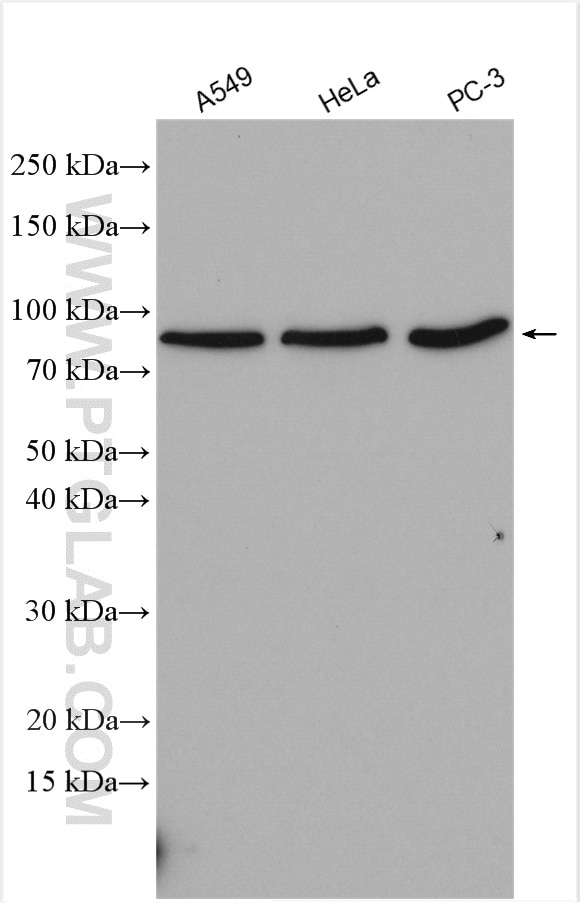
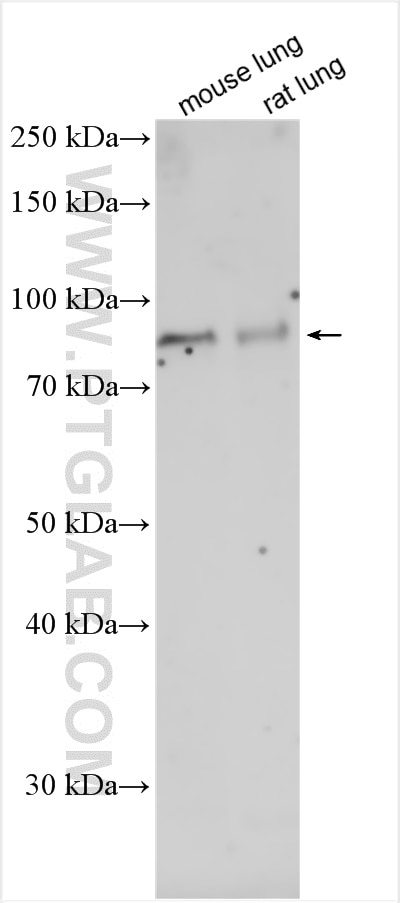
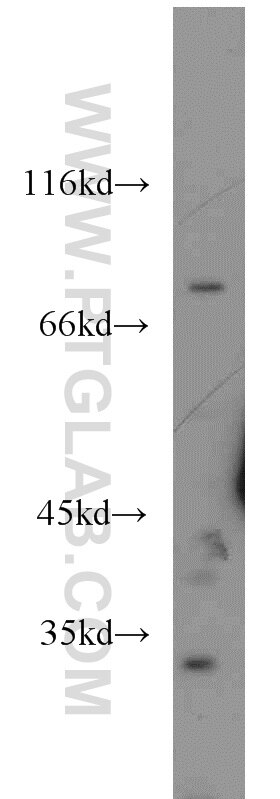
| Positive WB detected in | A549 cells, Jurkat cells, mouse lung tissue, HeLa cells, PC-3 cells, rat lung tissue |
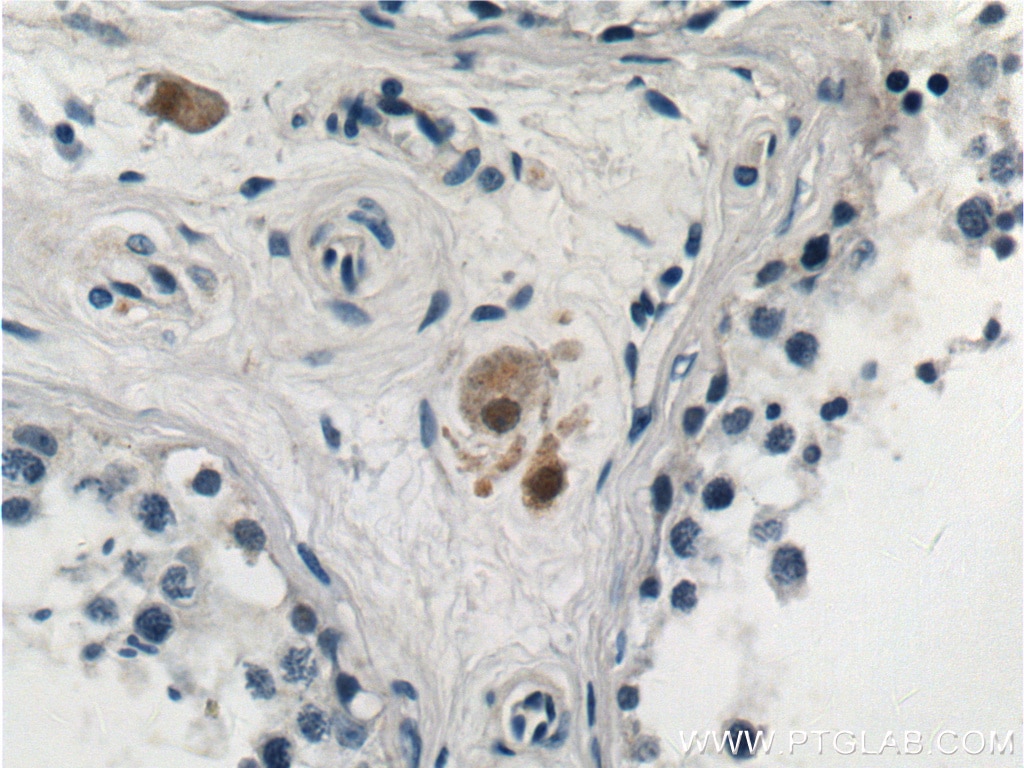
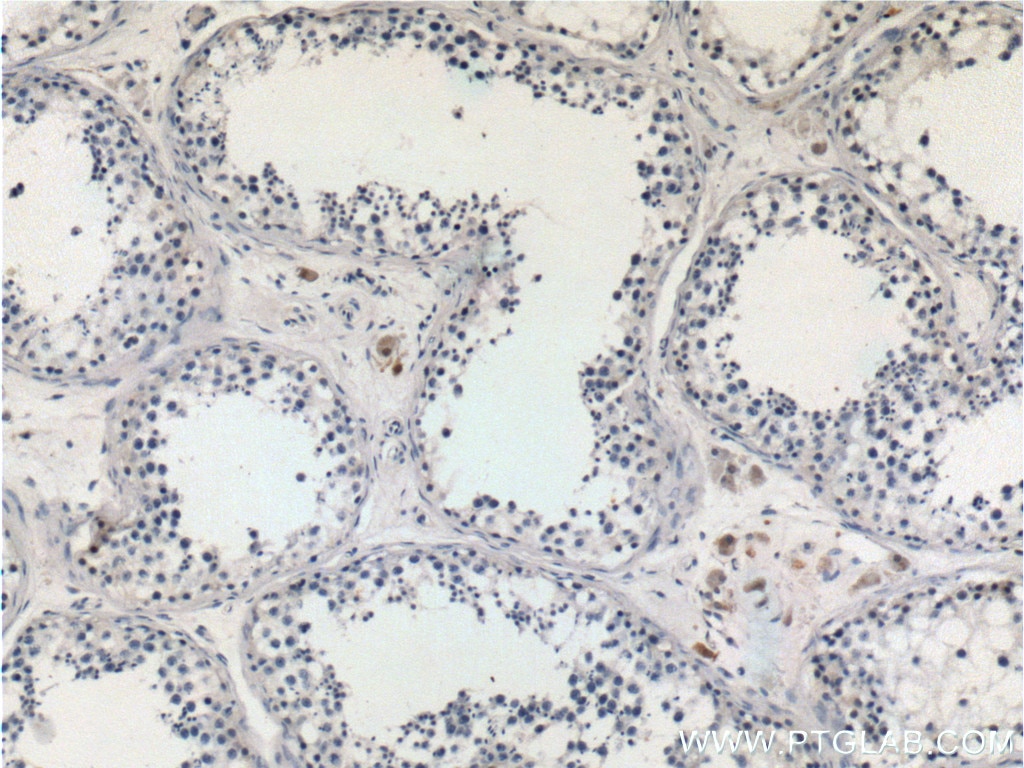
| Positive IHC detected in | human testis tissue Note: suggested antigen retrieval with TE buffer pH 9.0; (*) Alternatively, antigen retrieval may be performed with citrate buffer pH 6.0 |
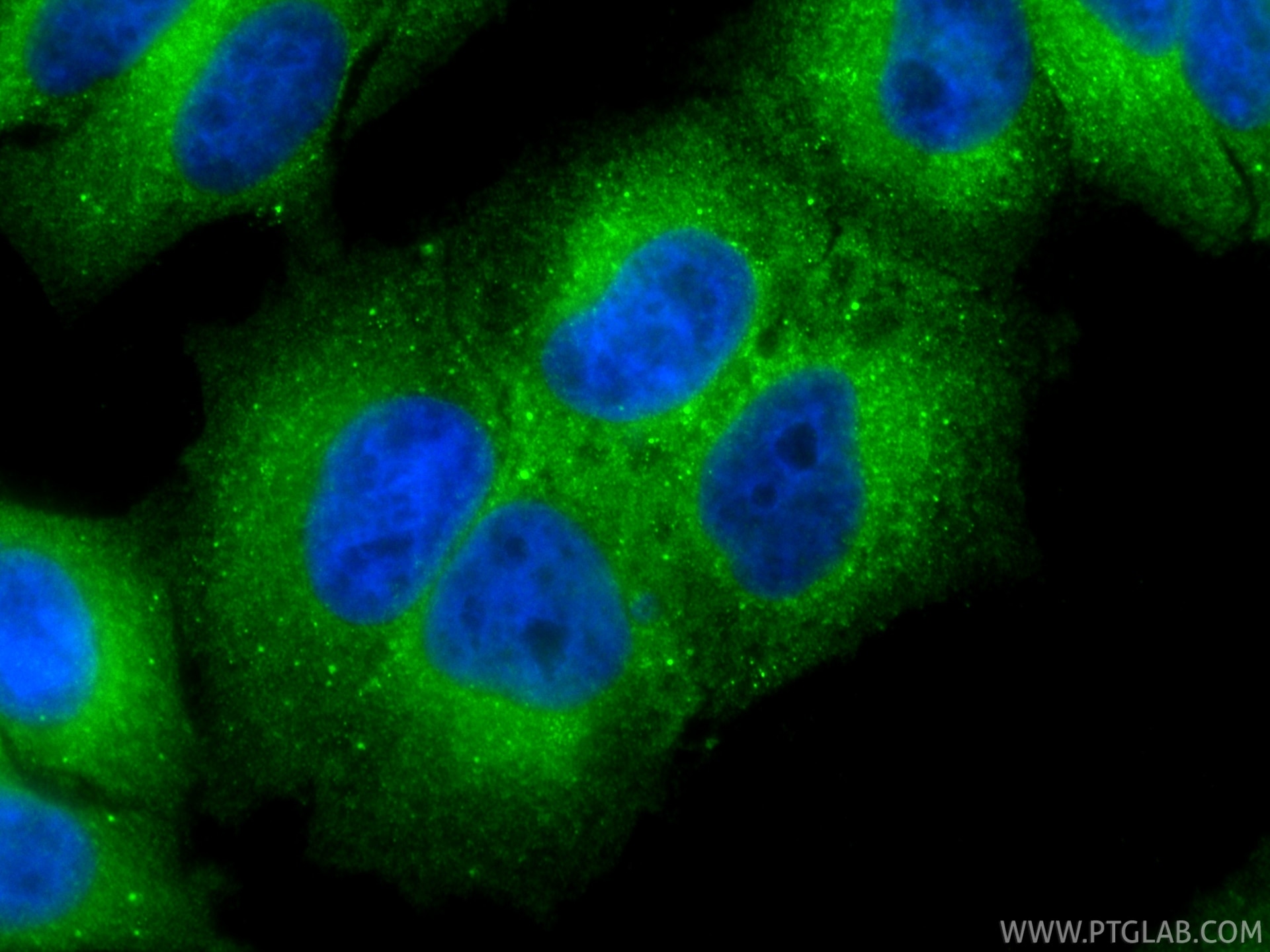
| Positive IF/ICC detected in | HepG2 cells |
Recommended dilution
| Application | Dilution |
|---|---|
| Western Blot (WB) | WB : 1:500-1:1000 |
| Immunohistochemistry (IHC) | IHC : 1:50-1:500 |
| Immunofluorescence (IF)/ICC | IF/ICC : 1:200-1:800 |
| It is recommended that this reagent should be titrated in each testing system to obtain optimal results. | |
| Sample-dependent, Check data in validation data gallery. | |
Published Applications
| KD/KO | See 3 publications below |
| WB | See 13 publications below |
| IHC | See 4 publications below |
| IF | See 1 publications below |
| ChIP | See 1 publications below |
Product Information
13028-1-AP targets STAT4 in WB, IHC, IF/ICC, ChIP, ELISA applications and shows reactivity with human, mouse, rat samples.
| Tested Reactivity | human, mouse, rat |
| Cited Reactivity | human, mouse, rat |
| Host / Isotype | Rabbit / IgG |
| Class | Polyclonal |
| Type | Antibody |
| Immunogen |
CatNo: Ag3660 Product name: Recombinant human STAT4 protein Source: e coli.-derived, PGEX-4T Tag: GST Domain: 399-748 aa of BC031212 Sequence: FRHLQPKEMKSSAGGKGNEGCHMVTEELHSITFETQICLYGLTIDLETSSLPVVMISNVSQLPNAWASIIWYNVSTNDSQNLVFFNNPPPATLSQLLEVMSWQFSSYVGRGLNSDQLHMLAEKLTVQSSYSDGHLTWAKFCKEHLPGKSFTFWTWLEAILDLIKKHILPLWIDGYVMGFVSKEKERLLLKDKMPGTFLLRFSESHLGGITFTWVDHSESGEVRFHSVEPYNKGRLSALPFADILRDYKVIMAENIPENPLKYLYPDIPKDKAFGKHYSSQPCEVSRPTERGDKGYVPSVFIPISTIRSDSTEPHSPSDLLPMSPSVYAVLRENLSPTTIETAMKSPYSAE 相同性解析による交差性が予測される生物種 |
| Full Name | signal transducer and activator of transcription 4 |
| Calculated molecular weight | 748 aa, 86 kDa |
| Observed molecular weight | 86 kDa |
| GenBank accession number | BC031212 |
| Gene Symbol | STAT4 |
| Gene ID (NCBI) | 6775 |
| RRID | AB_2196604 |
| Conjugate | Unconjugated |
| Form | |
| Form | Liquid |
| Purification Method | Antigen affinity purification |
| UNIPROT ID | Q14765 |
| Storage Buffer | PBS with 0.02% sodium azide and 50% glycerol{{ptg:BufferTemp}}7.3 |
| Storage Conditions | Store at -20°C. Stable for one year after shipment. Aliquoting is unnecessary for -20oC storage. |
Background Information
The JAK/STAT pathway is an extensive signaling pathway downstream of cytokine receptors. STATs are cytosolic proteins with a common structure consisting of an N-terminal oligomerization domain, which favors formation of STAT dimers, followed by a DNA-binding domain and a C-terminal SRC homology-2 (SH2) domain, which is involved in association between STATs and receptors[PMID:22383755]. Signal Transducer and Activator of Transcription 4 (STAT4) is a transcription factor that is activated by IL-12 signaling and promotes Th1-cell differentiation and IFN-γ production [PMID:21998209].
Protocols
| Product Specific Protocols | |
|---|---|
| IF protocol for STAT4 antibody 13028-1-AP | Download protocol |
| IHC protocol for STAT4 antibody 13028-1-AP | Download protocol |
| WB protocol for STAT4 antibody 13028-1-AP | Download protocol |
| Standard Protocols | |
|---|---|
| Click here to view our Standard Protocols |
Publications
| Species | Application | Title |
|---|---|---|
Ann Rheum Dis A novel STAT4 gain-of-function variant defines a monogenic form of juvenile-onset systemic lupus erythematosus. | ||
Bone Res Nuclear FGF2 orchestrates phase separation-mediated rDNA chromatin architecture to control BMSCs cell fate | ||
Adv Sci (Weinh) A Unique Chimeric RNA: ERCC1-iASPP Drives Benzo[a]pyrene-Induced Lung Carcinogenesis via Dual Coding and Non-Coding Mechanisms. | ||
Acta Pharmacol Sin Bardoxolone displays potent activity against triple negative breast cancer by inhibiting the TRIP13/STAT3 circuit | ||
Free Radic Biol Med Downregulated GPX4 in salivary gland epithelial cells contributes to salivary secretion dysfunction in Sjogren's syndrome via lipid ROS/pSTAT4/AQP5 axis |