
Validation Data Gallery
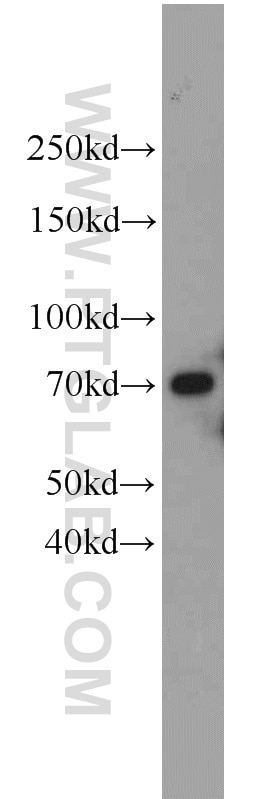
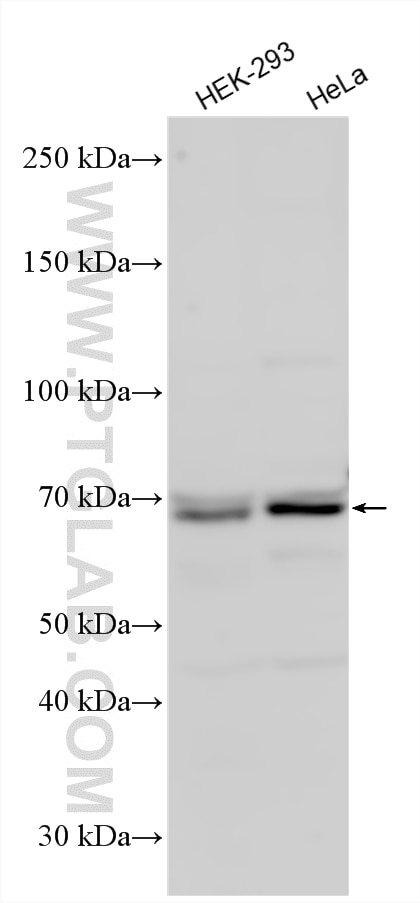
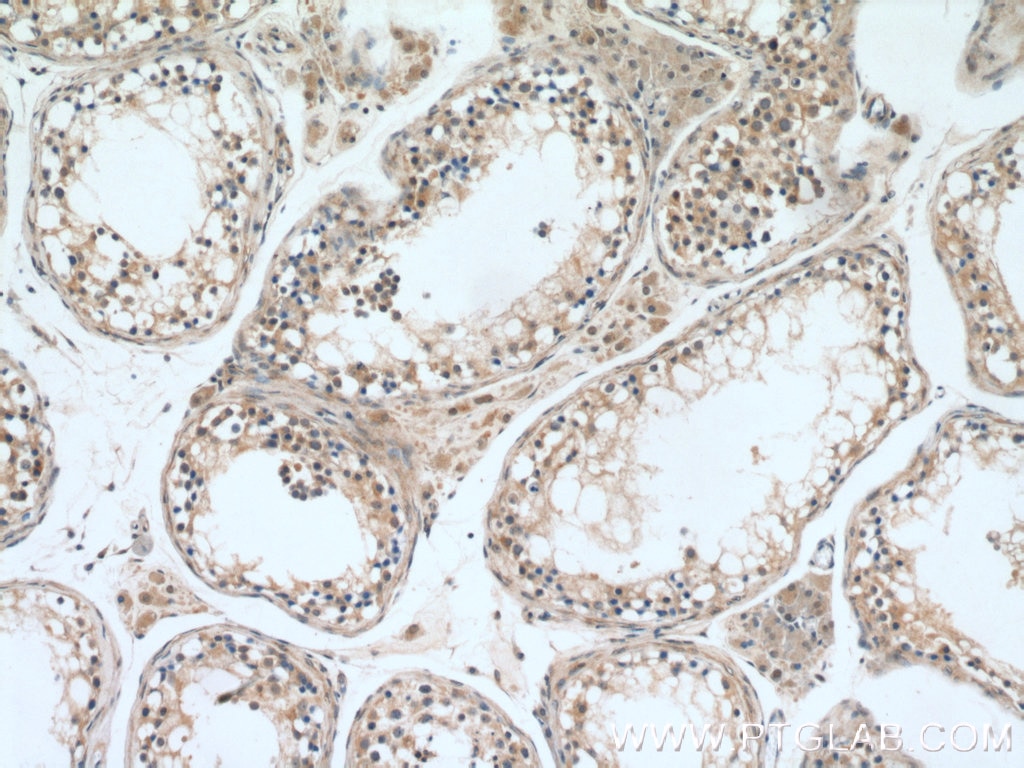
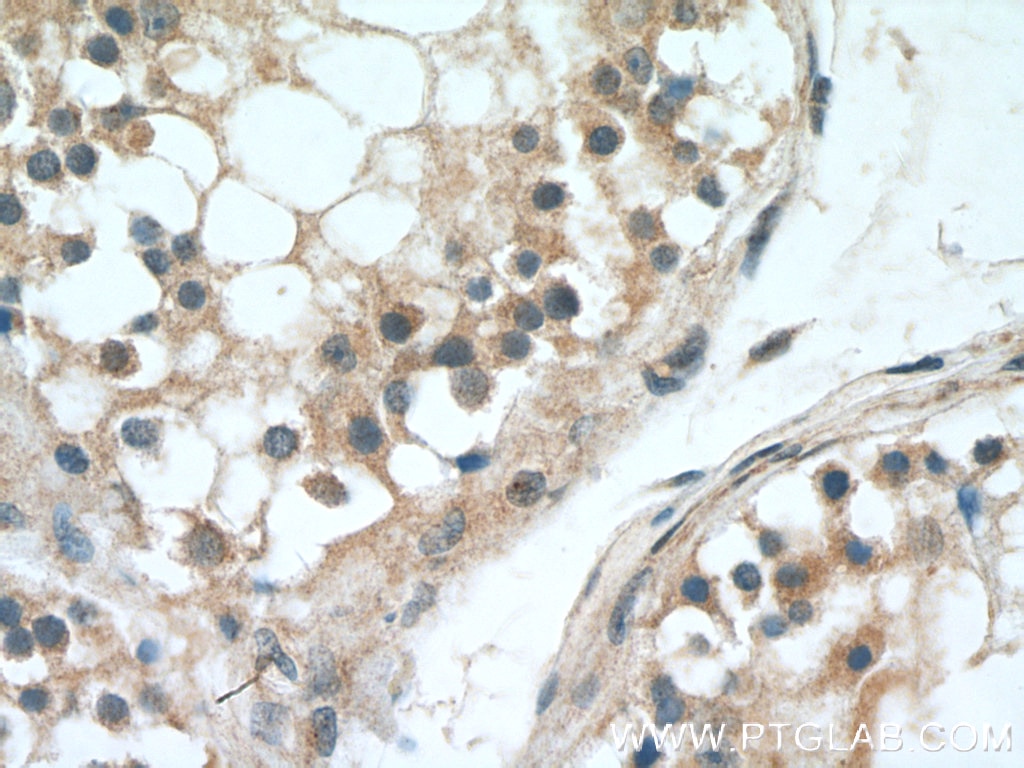
Tested Applications
| Positive WB detected in | HEK-293 cells, rat brain tissue, HeLa cells |
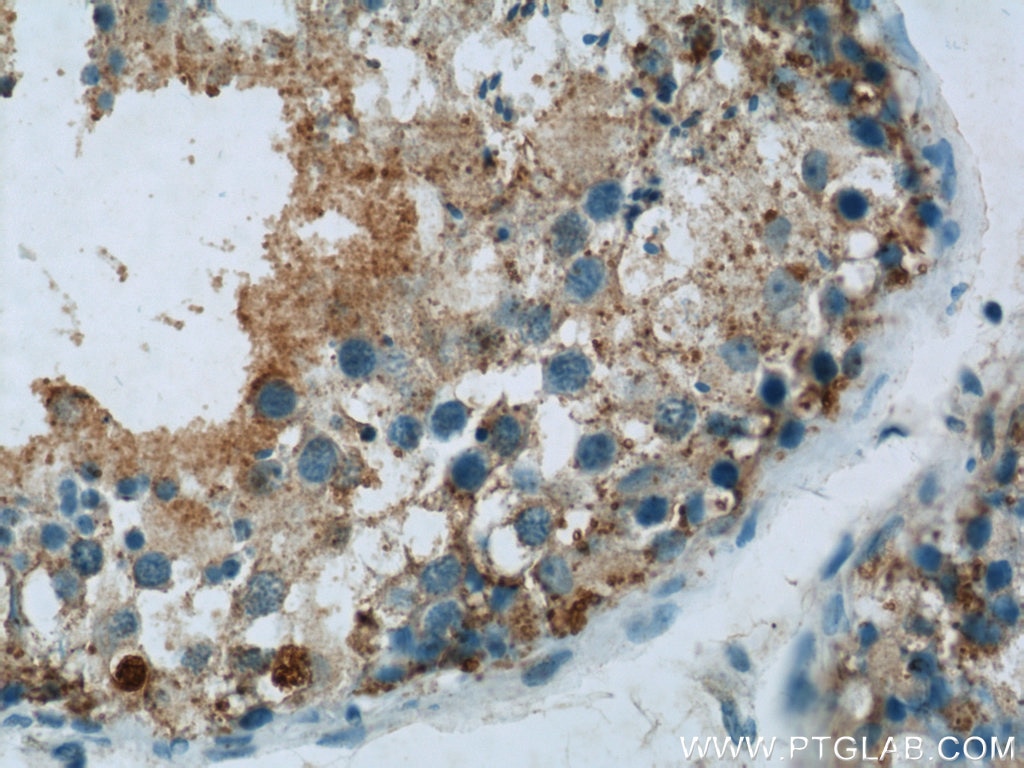
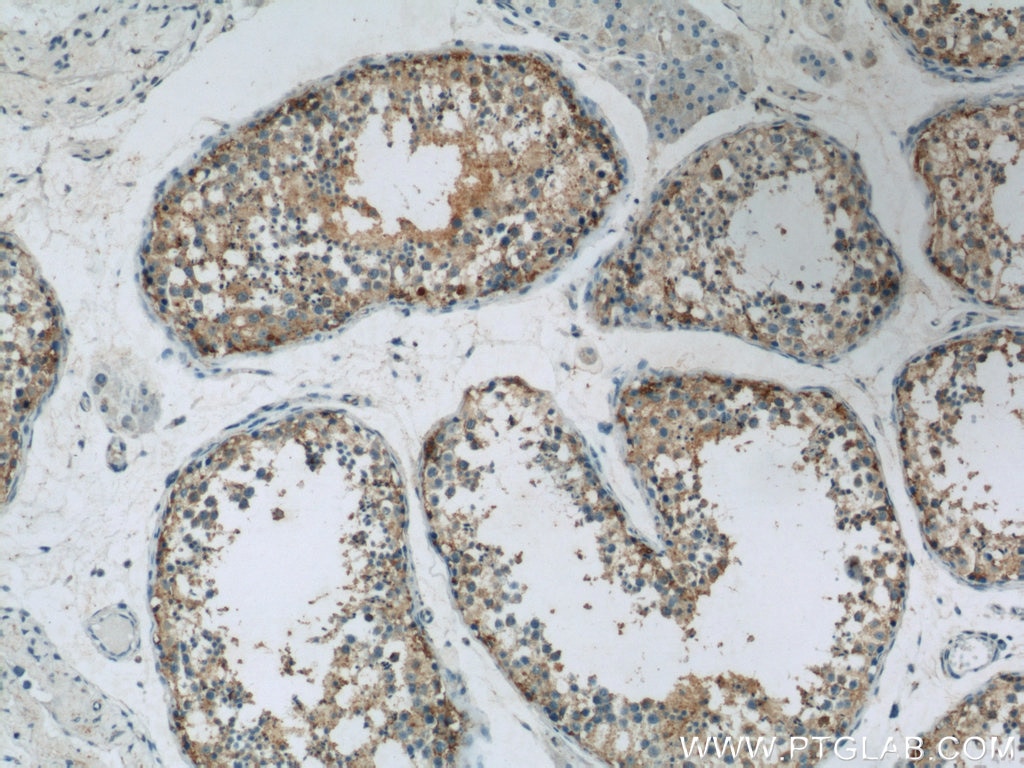
| Positive IHC detected in | human testis tissue Note: suggested antigen retrieval with TE buffer pH 9.0; (*) Alternatively, antigen retrieval may be performed with citrate buffer pH 6.0 |
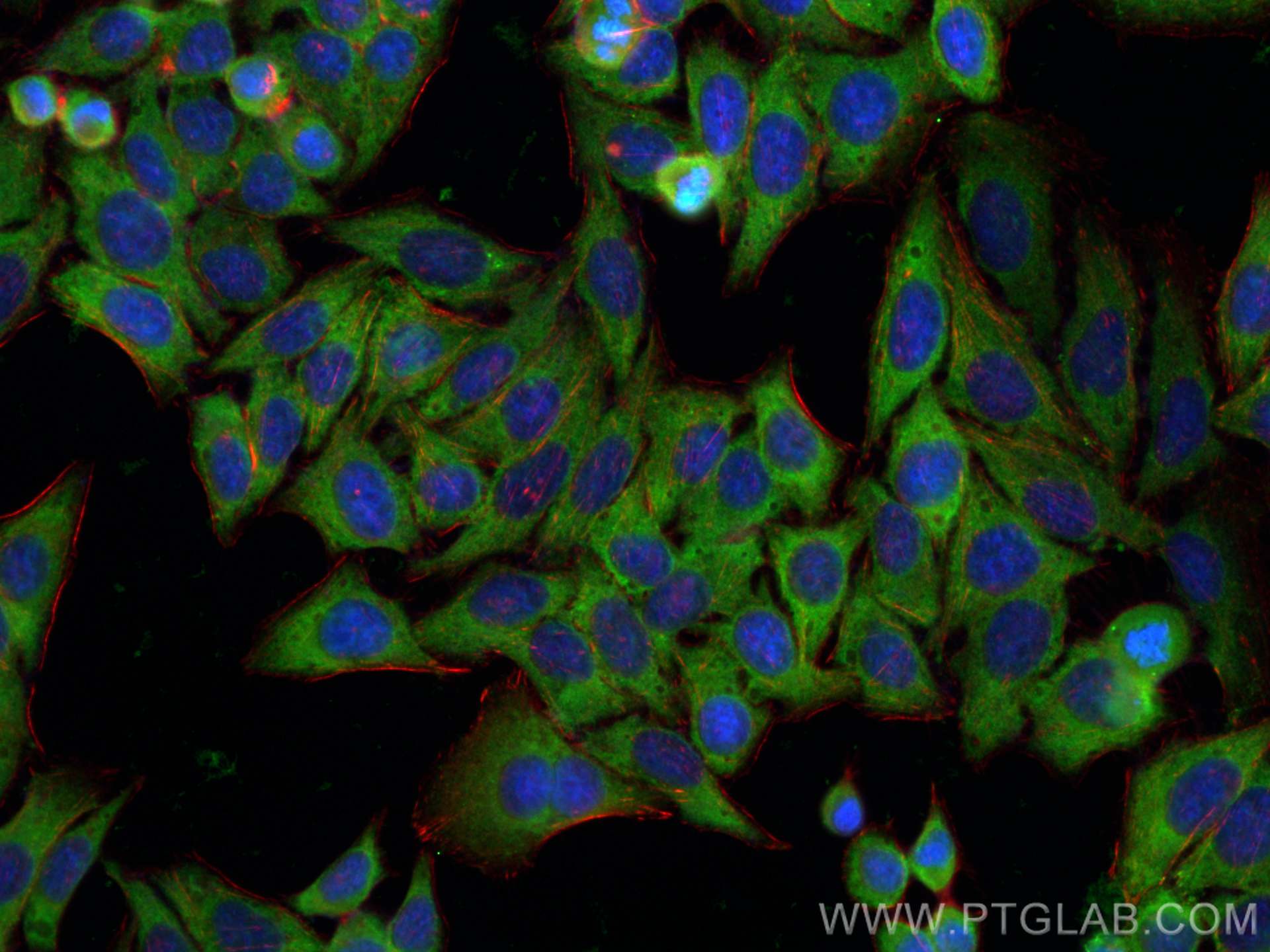
| Positive IF/ICC detected in | HepG2 cells |
Recommended dilution
| Application | Dilution |
|---|---|
| Western Blot (WB) | WB : 1:1000-1:4000 |
| Immunohistochemistry (IHC) | IHC : 1:50-1:500 |
| Immunofluorescence (IF)/ICC | IF/ICC : 1:200-1:800 |
| It is recommended that this reagent should be titrated in each testing system to obtain optimal results. | |
| Sample-dependent, Check data in validation data gallery. | |
Published Applications
| KD/KO | See 1 publications below |
| WB | See 10 publications below |
| IHC | See 1 publications below |
| IF | See 2 publications below |
| IP | See 2 publications below |
| ELISA | See 1 publications below |
Product Information
23449-1-AP targets Ubiquilin 2 in WB, IHC, IF/ICC, IP, ELISA applications and shows reactivity with human, rat samples.
| Tested Reactivity | human, rat |
| Cited Reactivity | human, mouse, rat |
| Host / Isotype | Rabbit / IgG |
| Class | Polyclonal |
| Type | Antibody |
| Immunogen |
CatNo: Ag20149 Product name: Recombinant human Ubiquilin 2 protein Source: e coli.-derived, PGEX-4T Tag: GST Domain: 1-624 aa of BC069237 Sequence: MAENGESSGPPRPSRGPAAAQGSAAAPAEPKIIKVTVKTPKEKEEFAVPENSSVQQFKEAISKRFKSQTDQLVLIFAGKILKDQDTLIQHGIHDGLTVHLVIKSQNRPQGQSTQPSNAAGTNTTSASTPRSNSTPISTNSNPFGLGSLGGLAGLSSLGLSSTNFSELQSQMQQQLMASPEMMIQIMENPFVQSMLSNPDLMRQLIMANPQMQQLIQRNPEISHLLNNPDIMRQTLEIARNPAMMQEMMRNQDLALSNLESIPGGYNALRRMYTDIQEPMLNAAQEQFGGNPFASVGSSSSSGEGTQPSRTENRDPLPNPWAPPPATQSSATTSTTTSTGSGSGNSSSNATGNTVAAANYVASIFSTPGMQSLLQQITENPQLIQNMLSAPYMRSMMQSLSQNPDLAAQMMLNSPLFTANPQLQEQMRPQLPAFLQQMQNPDTLSAMSNPRAMQALMQIQQGLQTLATEAPGLIPSFTPGVGVGVLGTAIGPVGPVTPIGPIGPIVPFTPIGPIGPIGPTGPAAPPGSTGSGGPTGPTVSSAAPSETTSPTSESGPNQQFIQQMVQALAGANAPQLPNPEVRFQQQLEQLNAMGFLNREANLQALIATGGDINAAIERLLGSQPS 相同性解析による交差性が予測される生物種 |
| Full Name | ubiquilin 2 |
| Calculated molecular weight | 624 aa, 66 kDa |
| Observed molecular weight | 66-70 kDa |
| GenBank accession number | BC069237 |
| Gene Symbol | UBQLN2 |
| Gene ID (NCBI) | 29978 |
| RRID | AB_2879282 |
| Conjugate | Unconjugated |
| Form | |
| Form | Liquid |
| Purification Method | Antigen affinity purification |
| UNIPROT ID | Q9UHD9 |
| Storage Buffer | PBS with 0.02% sodium azide and 50% glycerol{{ptg:BufferTemp}}7.3 |
| Storage Conditions | Store at -20°C. Stable for one year after shipment. Aliquoting is unnecessary for -20oC storage. |
Background Information
Ubiquilin-2 (UBQLN2) is a multifunctional, ubiquitin-binding shuttle protein that plays a central role in maintaining cellular protein homeostasis. It is a member of the ubiquilin family of proteins found in all eukaryotes, which function to regulate the degradation of ubiquitinated proteins. Of the five different UBQLN genes in humans, UBQLN2 is the most highly expressed in the nervous system and muscle tissue and has been linked to multiple neurodegenerative diseases. (PMID: 40663766, PMID: 40663766)
Protocols
| Product Specific Protocols | |
|---|---|
| IF protocol for Ubiquilin 2 antibody 23449-1-AP | Download protocol |
| IHC protocol for Ubiquilin 2 antibody 23449-1-AP | Download protocol |
| WB protocol for Ubiquilin 2 antibody 23449-1-AP | Download protocol |
| Standard Protocols | |
|---|---|
| Click here to view our Standard Protocols |
Publications
| Species | Application | Title |
|---|---|---|
Brain Tamoxifen improves muscle structure and function of Bin1- and Dnm2-related centronuclear myopathies | ||
Hum Mol Genet Conditional depletion of intellectual disability and Parkinsonism candidate gene ATP6AP2 in fly and mouse induces cognitive impairment and neurodegeneration. | ||
J Neurochem Pathogenic mutation of UBQLN2 impairs its interaction with UBXD8 and disrupts endoplasmic reticulum-associated protein degradation. | ||
Mol Neurobiol Synaptic Vesicle-Related Proteins and Ubiquilin 2 in Cortical Synaptosomes Mediate Cognitive Impairment in Vascular Dementia Rats | ||
Neurobiol Dis Novel extracellular vesicle release pathway facilitated by toxic superoxide dismutase 1 oligomers. |