
Validation Data Gallery
Tested Applications
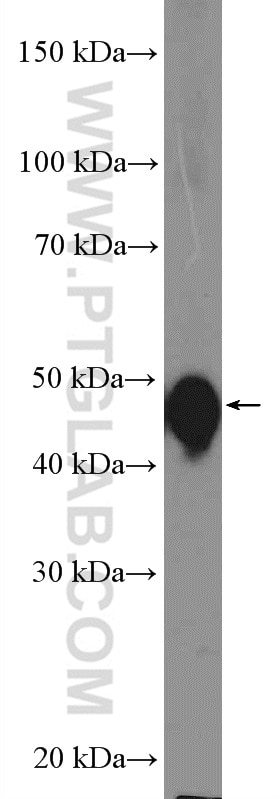
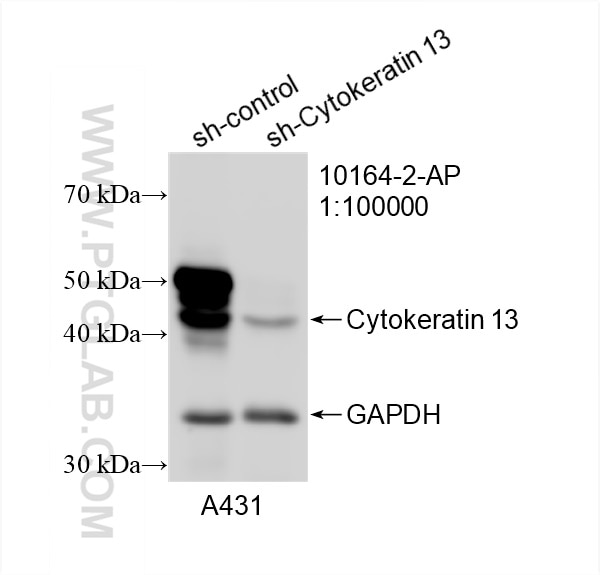
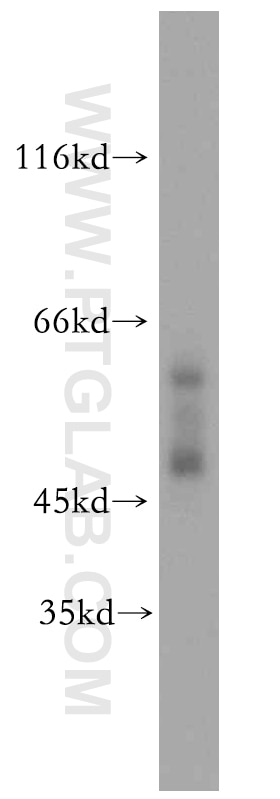
| Positive WB detected in | A431 cells, mouse skin tissue |
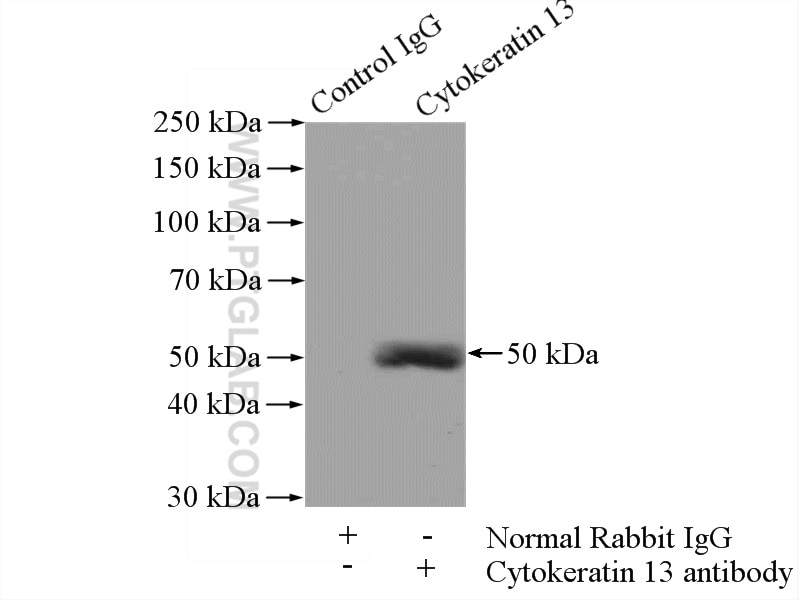
| Positive IP detected in | A431 cells |
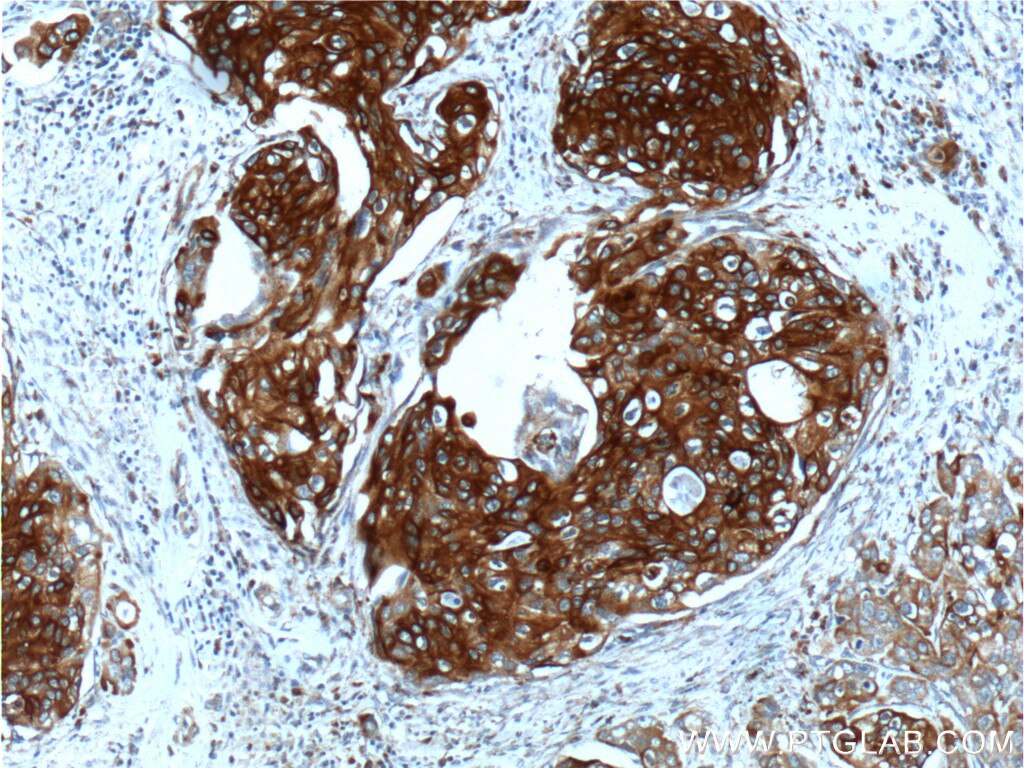
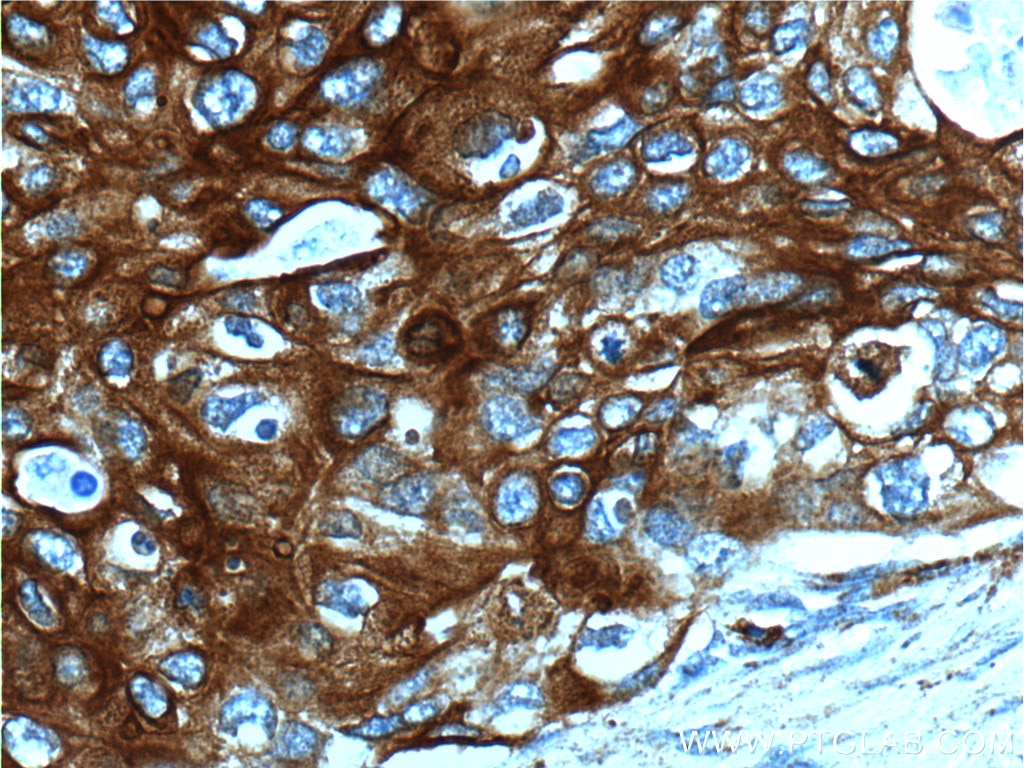
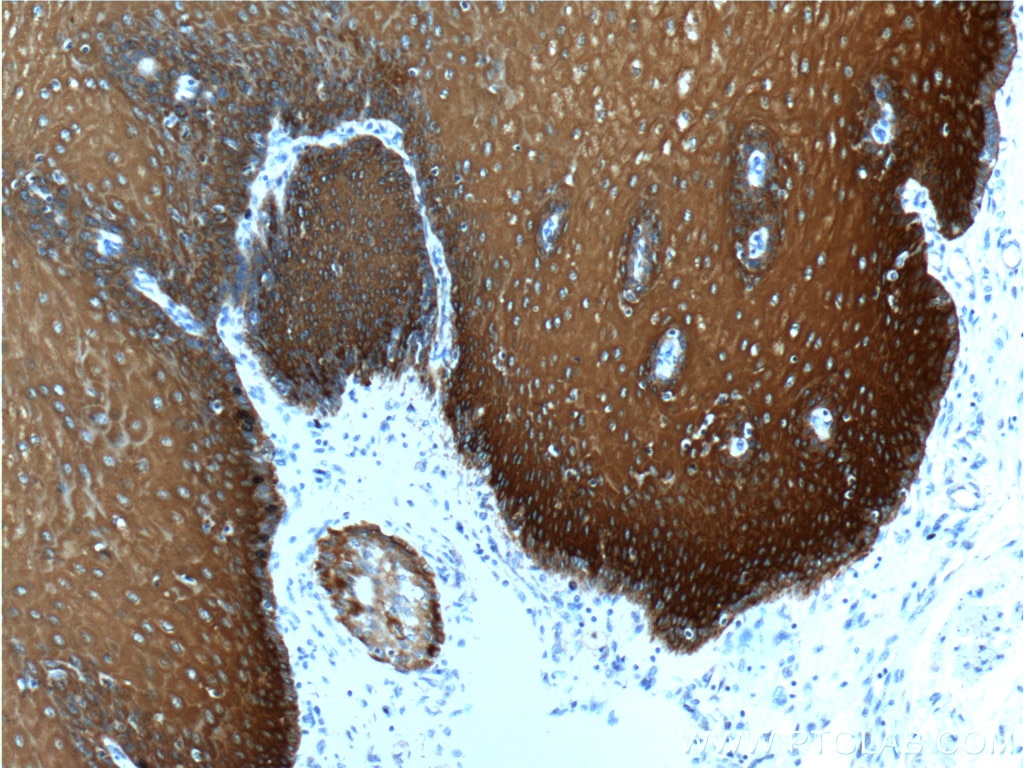
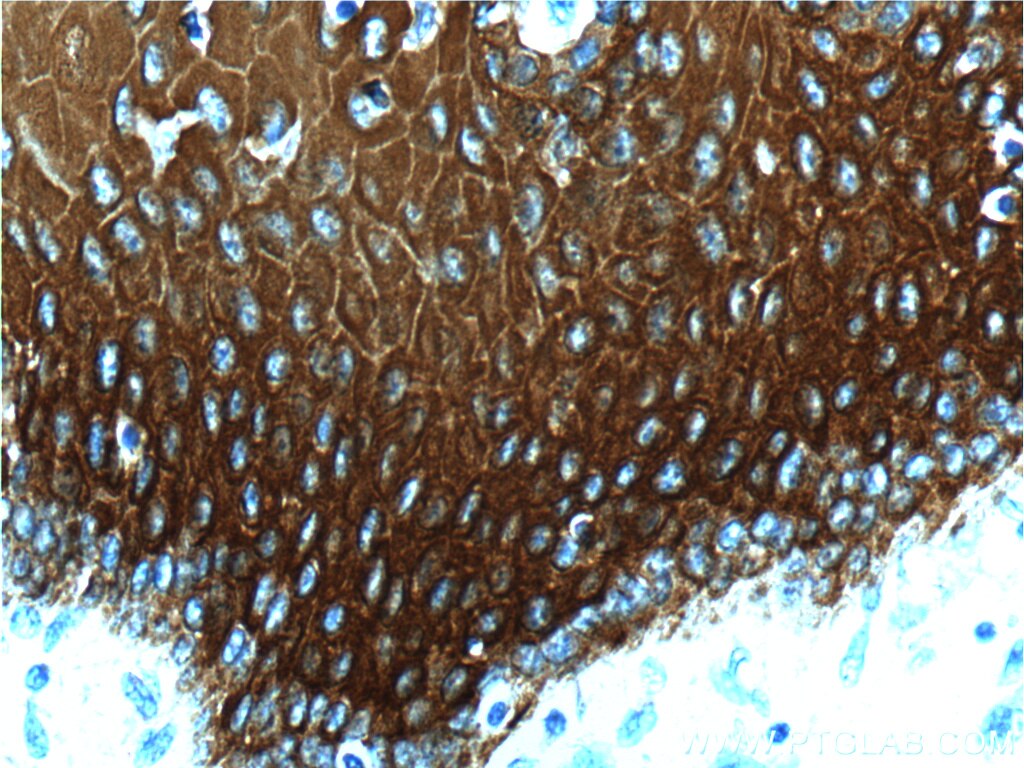
| Positive IHC detected in | human cervical cancer tissue, human oesophagus tissue Note: suggested antigen retrieval with TE buffer pH 9.0; (*) Alternatively, antigen retrieval may be performed with citrate buffer pH 6.0 |
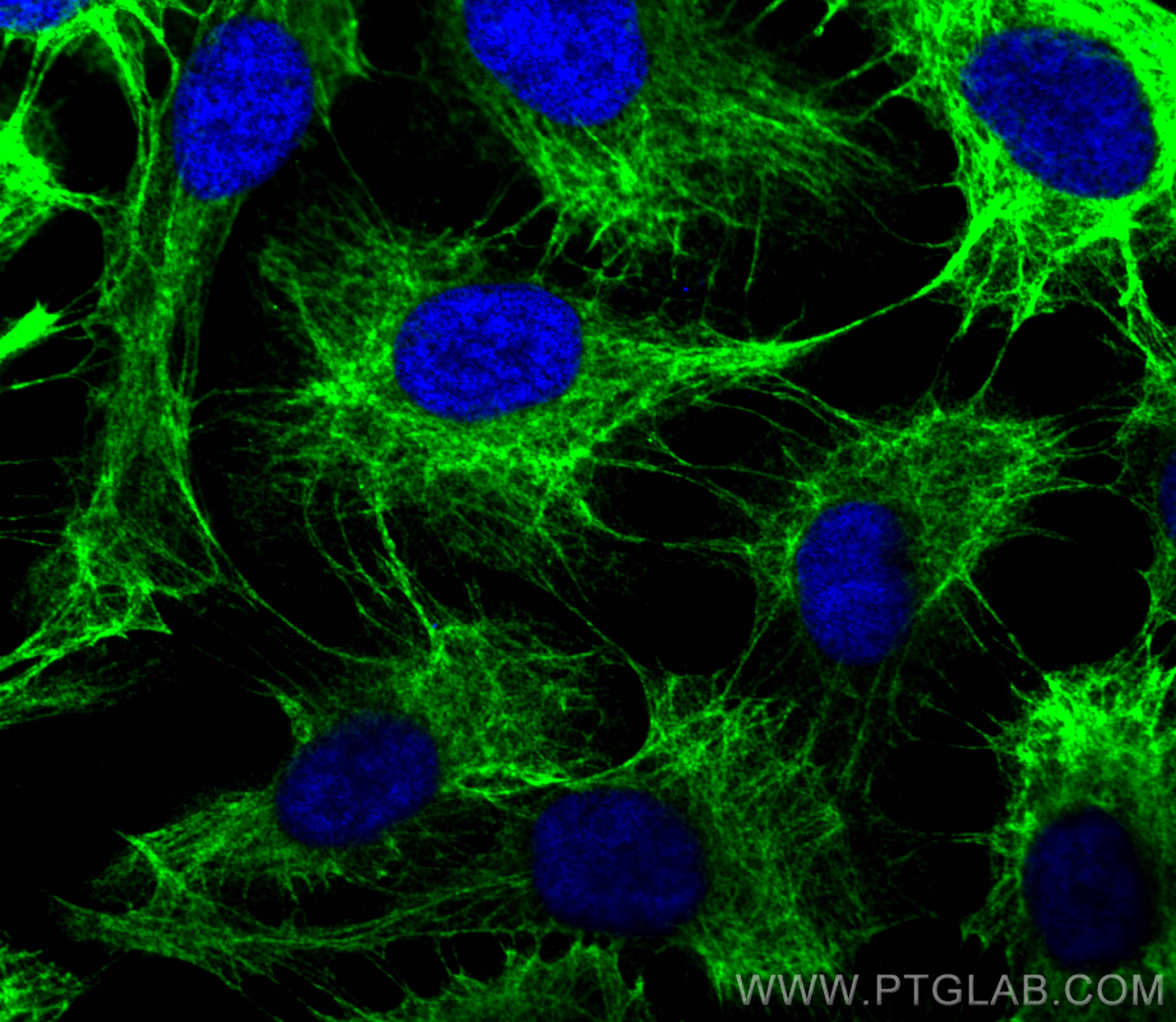
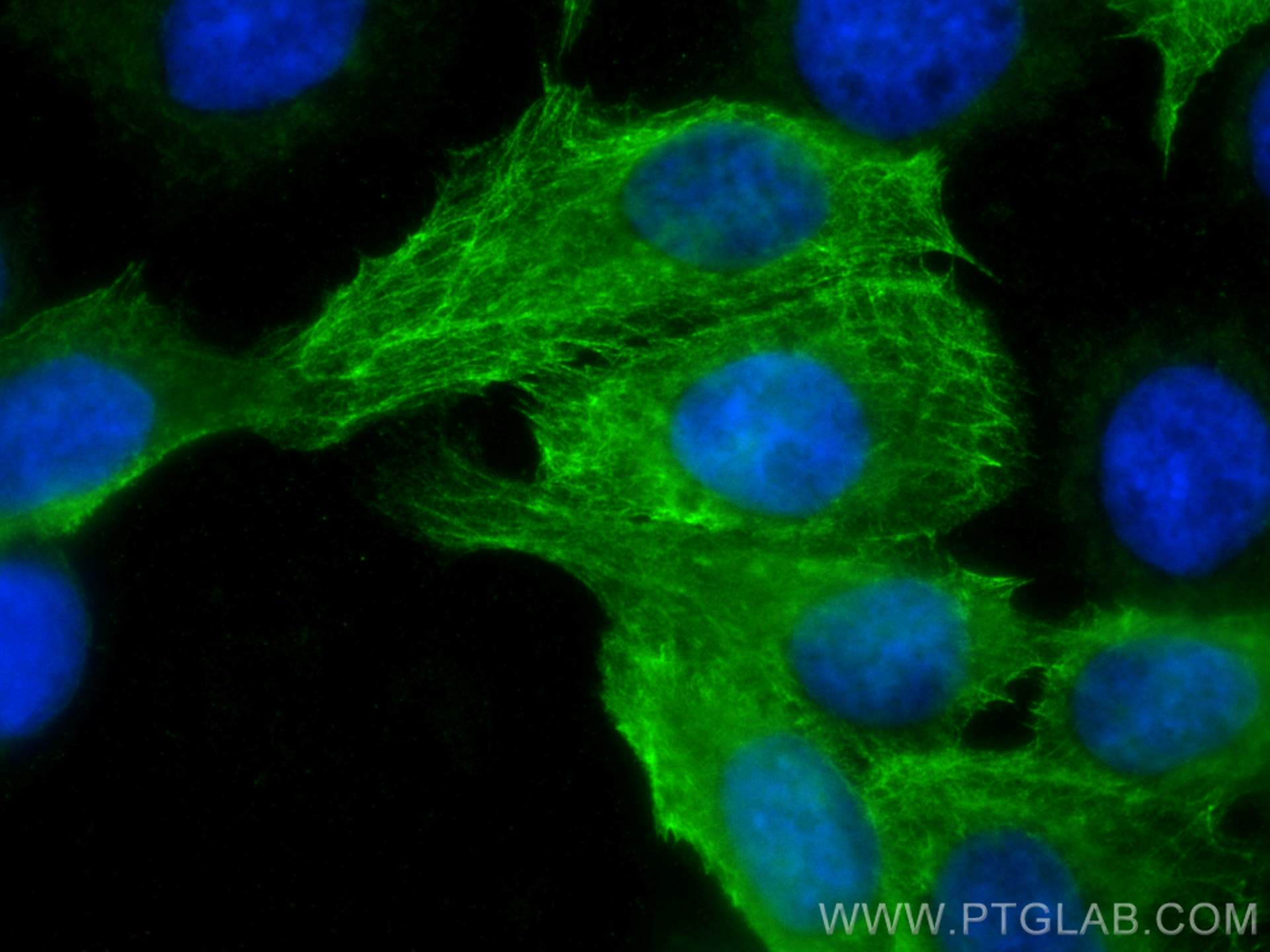
| Positive IF/ICC detected in | HaCaT cells, A431 cells |
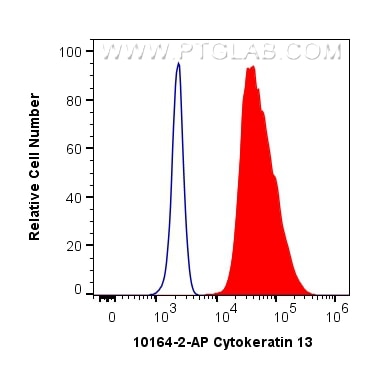
| Positive FC (Intra) detected in | A431 cells |
Recommended dilution
| Application | Dilution |
|---|---|
| Western Blot (WB) | WB : 1:5000-1:10000 |
| Immunoprecipitation (IP) | IP : 0.5-4.0 ug for 1.0-3.0 mg of total protein lysate |
| Immunohistochemistry (IHC) | IHC : 1:50-1:500 |
| Immunofluorescence (IF)/ICC | IF/ICC : 1:50-1:500 |
| Flow Cytometry (FC) (INTRA) | FC (INTRA) : 0.40 ug per 10^6 cells in a 100 µl suspension |
| It is recommended that this reagent should be titrated in each testing system to obtain optimal results. | |
| Sample-dependent, Check data in validation data gallery. | |
Published Applications
| WB | See 8 publications below |
| IHC | See 6 publications below |
| IF | See 17 publications below |
Product Information
10164-2-AP targets Cytokeratin 13 in WB, IHC, IF/ICC, FC (Intra), IP, ELISA applications and shows reactivity with human, mouse samples.
| Tested Reactivity | human, mouse |
| Cited Reactivity | human, mouse, monkey |
| Host / Isotype | Rabbit / IgG |
| Class | Polyclonal |
| Type | Antibody |
| Immunogen |
CatNo: Ag0217 Product name: Recombinant human KRT13 protein Source: e coli.-derived, PGEX-4T Tag: GST Domain: 184-457 aa of BC002661 Sequence: RLAVDDFRLKYENELALRQSVEADINGLRRVLDELTLSKTDLEMQIESLNEELAYMKKNHEEEMKEFSNQVVGQVNVEMDATPGIDLTRVLAEMREQYEAMAERNRRDAEEWFHAKSAELNKEVSTNTAMIQTSKTEITELRRTLQGLEIELQSQLSMKAGLENTVAETECRYALQLQQIQGLISSIEAQLSELRSEMECQNQEYKMLLDIKTRLEQEIATYRSLLEGQDAKMIGFPSSAGSVSPRSTSVTTTSSASVTTTSNASGRRTSDVRR 相同性解析による交差性が予測される生物種 |
| Full Name | keratin 13 |
| Calculated molecular weight | 50 kDa |
| Observed molecular weight | 50 kDa |
| GenBank accession number | BC002661 |
| Gene Symbol | Cytokeratin 13 |
| Gene ID (NCBI) | 3860 |
| RRID | AB_2134679 |
| Conjugate | Unconjugated |
| Form | |
| Form | Liquid |
| Purification Method | Antigen affinity purification |
| UNIPROT ID | P13646 |
| Storage Buffer | PBS with 0.02% sodium azide and 50% glycerol{{ptg:BufferTemp}}7.3 |
| Storage Conditions | Store at -20°C. Stable for one year after shipment. Aliquoting is unnecessary for -20oC storage. |
Background Information
Keratin 13 is a member of the keratin family. The keratins are intermediate filament proteins responsible for the structural integrity of epithelial cells and are subdivided into cytokeratins and hair keratins. Most of the type I cytokeratins consist of acidic proteins which are arranged in pairs of heterotypic keratin chains. This type I cytokeratin is paired with keratin 4 and expressed in the suprabasal layers of non-cornified stratified epithelia. Mutations in keratin 13 gene and keratin 4 have been associated with the autosomal dominant disorder White Sponge Nevus. The type I cytokeratins are clustered in a region of chromosome 17q21.2.
Protocols
| Product Specific Protocols | |
|---|---|
| FC protocol for Cytokeratin 13 antibody 10164-2-AP | Download protocol |
| IF protocol for Cytokeratin 13 antibody 10164-2-AP | Download protocol |
| IHC protocol for Cytokeratin 13 antibody 10164-2-AP | Download protocol |
| IP protocol for Cytokeratin 13 antibody 10164-2-AP | Download protocol |
| WB protocol for Cytokeratin 13 antibody 10164-2-AP | Download protocol |
| Standard Protocols | |
|---|---|
| Click here to view our Standard Protocols |
Publications
| Species | Application | Title |
|---|---|---|
Nat Commun Nanostructured organic sheets sequestering small extracellular vesicles and reactive species to protect against radiation-induced mucositis | ||
Int J Oral Sci Single-cell transcriptomics reveals cell atlas and identifies cycling tumor cells responsible for recurrence in ameloblastoma | ||
J Nanobiotechnology Streptococcus mutans-derived extracellular vesicles promote skin wound healing via tRNA cargo | ||
Theranostics Differential effect of cancer-associated fibroblast-derived extracellular vesicles on cisplatin resistance in oral squamous cell carcinoma via miR-876-3p | ||
J Allergy Clin Immunol The SPRR2A-CSTA axis drives IL-17A-induced squamous metaplasia and steroid resistance in allergic rhinitis. |